Employment Contracts
Protect your business. Set clear expectations. Build trust from day one.
The right employment contract does more than tick a legal box — it protects your business, clarifies responsibilities, and sets the tone for a professional and fair relationship with every team member.
At My HR Partner, we create compliant, plain-English employment contracts tailored to Australian small businesses. You’ll feel confident that every agreement covers the essentials — and that your people understand exactly what’s expected.
What you’ll get
Professionally drafted employment contracts tailored to your roles and industry.
Includes position descriptions that outline duties, expectations, and performance standards.
Access to expert HR advice to help you issue, update and manage contracts correctly.
The result
Peace of mind knowing every employee is set up the right way.
Your team starts strong, and you stay protected.
Why business owners choose us
Clarity from day one. Each contract sets out terms and conditions in straightforward language, avoiding misunderstandings down the track.
Stay compliant. Every contract aligns with current Australian employment laws, the National Employment Standards (NES), and the relevant Award.
Save time and money. Skip the guesswork of DIY templates, we do the work for you.
Tailored to your business. Whether you’re hiring full-time, part-time, or casual employees, your contract reflects your workplace structure and needs.
Your employment contract comes fully completed with your business and employee details. We also provide a template you can use.
The Employment Contract covers key aspects like employee details, probation, salary, hours, and leave entitlements including job duties, bonuses, overtime, and additional clauses on confidentiality, leave, post-employment restraints, dispute resolution, and governing laws.
Employment Contracts
Get your contracts created for you
Your employment contract is
provided fully completed with your
business details and the employee
details. We also provide an employment contract template that you can use
for future employees.
When you employ people in your business, they need to know what you expect from them & what they can expect from you.
Employment contracts clearly outline the expectations between employers and employees, covering areas like job duties, pay, and conditions.
Get your contracts sorted today
Focus on running your business — we’ll make sure your paperwork protects it.
Order your combined contracts and policies here:
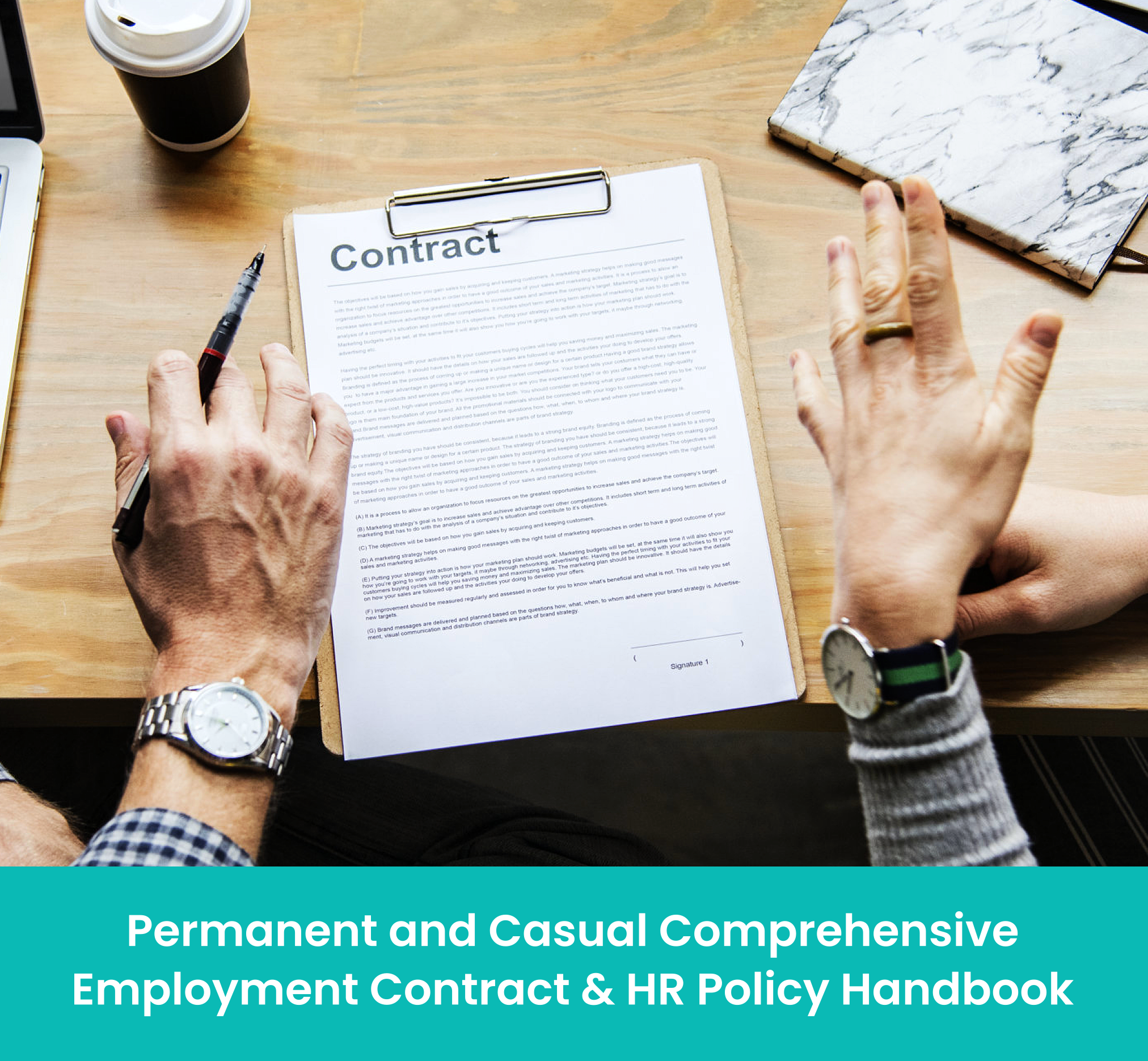
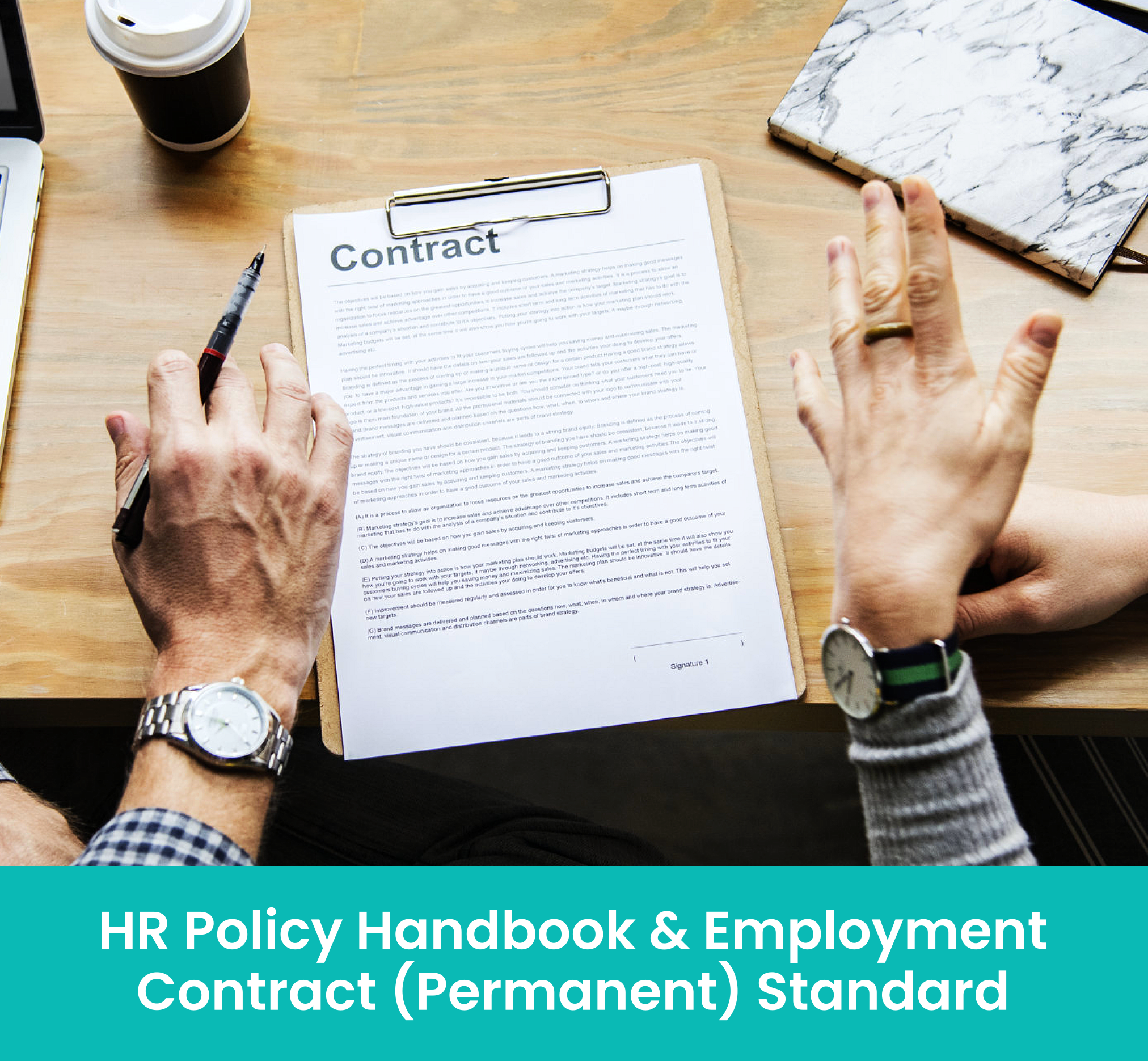
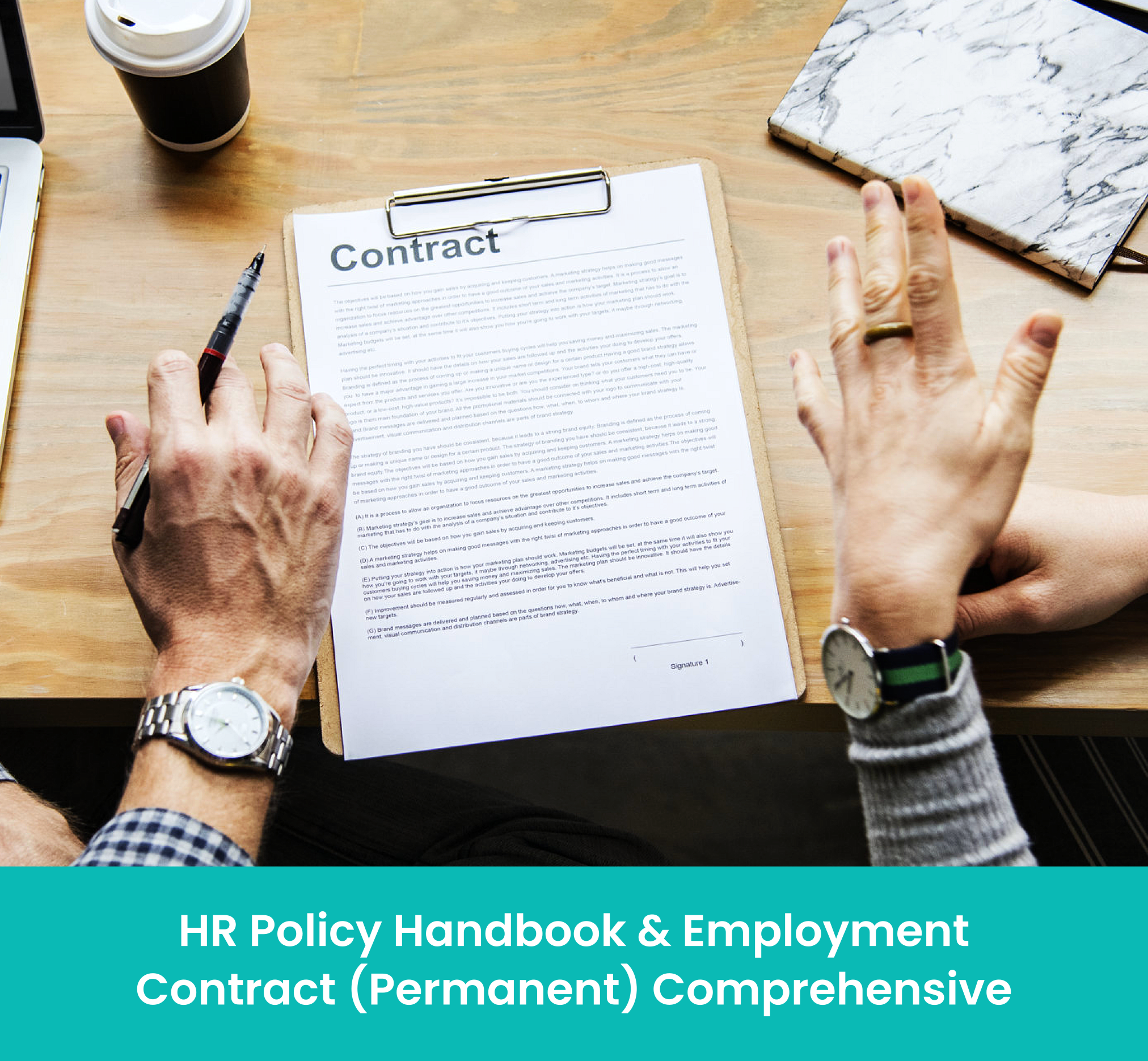

Your employment contract comes fully completed with your business and employee details. We also provide a template you can use for future hires.
The Comprehensive Employment Contract
covers key aspects like employee details, probation, salary, hours, and leave entitlements including job duties, bonuses, overtime, and additional clauses on confidentiality, leave, post-employment restraints, dispute resolution, and governing laws.
Our Latest Blog Post

What Is a Psychosocial Hazard and What Does It Mean for Your Small Business?
If you've been hearing the term "psychosocial hazard" lately and wondering what it actually means for your business, you're not alone.
It sounds technical. But it doesn't have to be complicated.
Here's a plain English explanation of what it means, what's now required of you as an employer, and why having good intentions isn't always enough.
What Is a Psychosocial Hazard?
A psychosocial hazard is anything about how work is set up or managed that could cause psychological harm to someone in your team.
It's not just about obvious things like bullying or harassment. It also includes everyday situations like:
Workloads that are consistently too high
Unclear expectations or constantly shifting priorities
Poor communication from management
Lack of support when things go wrong
Job insecurity or constant change
Low recognition for good work
People feeling micromanaged or powerless in their role
These things are more common in small businesses than most owners realise, especially when teams are lean and everyone is stretched.
What Does the Law Now Require?
As of December 2025, psychosocial hazard regulations are now enforceable across every Australian state and territory. Victoria was the last to come on board, so there are no longer any exceptions.
Under Work Health and Safety (WHS) law, every employer regardless of size must:
Identify psychosocial hazards in the workplace
Assess the risks those hazards create
Put controls in place to eliminate or minimise those risks
Review those controls regularly
This is the same four-step process already used for physical hazards like a wet floor, a trip hazard or a faulty piece of equipment. Psychological risks are now treated the same way.
The key phrase in the legislation is "so far as is reasonably practicable." This doesn't mean eliminating all stress from work. It means taking reasonable steps to identify what might be causing harm and doing something about it. Just the same as it's unlikely you can completely eliminate physical hazards.
Having Good Intentions Isn't Always Enough
A lot of business owners hear "psychosocial hazards" and might think "We've got an EAP (Employee Assistance Program). Our team knows they can access support if they need it. We're covered."
Having an EAP is genuinely valuable, but it's not enough on its own.
Think of it this way - An EAP is there to support people who are already struggling. It doesn't prevent the harm from happening in the first place. It's a support but it's not a preventative measure.
The same goes for having a mental health policy or running an RUOK? Day event. These things matter, but they don't replace a proper approach to managing risk.
What regulators are now looking for is structural change, not just awareness and good intentions.
So What Does That Actually Look Like?
It comes down to how work is designed and managed in your business day to day. Here are the areas regulators focus on:
Workload and job demands
Are your team members regularly working beyond their hours?
Are deadlines unrealistic?
Is one person consistently covering two roles?
Chronic overwork is now a legal risk, not just a culture problem.
Role clarity
Do your people know what's expected of them?
Do they understand what decisions they can make on their own?
Ambiguity and confusion create stress, and over time that can cause real harm.
Manager behaviour
How managers communicate, delegate, give feedback, and handle conflict is now a compliance matter.
This includes you, if you're also managing people day to day.
Poor people management is one of the biggest psychosocial risk drivers.
Control and autonomy
People who have at least some say in how they do their work tend to experience lower levels of stress.
Micromanagement, even when well-intentioned, can create risk.
Support and recognition
People who feel invisible at work, or who work hard without any acknowledgement, are more vulnerable to psychological harm.
This doesn't have to mean formal rewards. Regular check-ins and honest, caring feedback can make a real difference. It could be as. simple as a "thank you".
Change management
If restructures, ownership changes ornew systems aren't handled thoughtfully, they create real uncertainty and anxiety for your team.
That's also a psychosocial hazard.
What Are Regulators Actually Looking For?
WHS inspectors are now issuing improvement notices to businesses for things like:
Excessive or unrealistic workloads
Unresolved conflict in the team
Harmful or dismissive management behaviour
No clear way for employees to raise concerns
No documentation showing hazards have been identified and managed
For a small business, this doesn't mean you need a psychologist on staff or a complex safety system. It means being able to show that you've thought about it, taken some action, and kept a record.
Where Do You Start?
If this feels overwhelming, here are some simple, practical first steps:
1. Talk to your team
Have a genuine conversation about whether workloads are manageable, whether expectations are clear, and whether people feel comfortable raising concerns. It doesn't need to be formal. A real conversation is a good starting point.
2. Look honestly at how work is designed
Are any roles consistently overloaded? Are there people who never seem to take a proper break? Is there anything about the way work is managed that might be creating pressure or anxiety? Start there.
3. Add psychosocial hazards to your WHS risk register
If you already have a risk register, it should now include psychological risks alongside physical ones. If you don't have one, this is a good time to put a simple version in place.
4. Document what you're doing
You don't need lengthy reports. But being able to show that you identified a concern, took a reasonable step to address it, and plan to review it can make a real difference if a complaint or inspection ever arises.
5. Don't rely on EAP alone
Keep it, it's a genuinely useful resource. But pair it with prevention. Think of an EAP as support for when harm has already occurred. Your obligation as an employer is to reduce the likelihood of harm happening in the first place.
A Note on Business Size
Some business owners assume these obligations are really aimed at larger organisations. They're not.
The "reasonably practicable" standard does take your size and resources into account. A 5-person business won't be held to the same standard as a 500-person organisation. But being small isn't a reason to do nothing.
The Bottom Line
Psychosocial hazards aren't as complicated as they sound. They're the parts of work that quietly wear people down over time:
too much pressure
too little support
unclear expectations
feeling unheard
You probably already have a sense of where those pressure points are in your business. The question is whether you're actively doing something about them. That's what's now required.
If you'd like help working out what this looks like in practice for a business your size, that's exactly the kind of support we offer at My HR Partner.
Get in touch and we can work through it together. https://myhrp.com.au/hr-advice-calls
This article provides general information only and does not constitute legal or professional advice. If you have specific concerns about your WHS obligations, we recommend seeking tailored advice.

We provide HR advice and support. We have trusted partners to assist with any employment law issues
outside of our scope.
More info
Suite 17, 741-743 Lawrence Hargrave Dr COLEDALE NSW
4/133 Wharf St TWEED HEADS NSW
ABN 30 644 527 015

Get HR Advice from our HR expert
Our Latest Blog Post
What Is a Psychosocial Hazard and What Does It Mean for Your Small Business?
If you've been hearing the term "psychosocial hazard" lately and wondering what it actually means for your business, you're not alone.
It sounds technical. But it doesn't have to be complicated.
Here's a plain English explanation of what it means, what's now required of you as an employer, and why having good intentions isn't always enough.
What Is a Psychosocial Hazard?
A psychosocial hazard is anything about how work is set up or managed that could cause psychological harm to someone in your team.
It's not just about obvious things like bullying or harassment. It also includes everyday situations like:
Workloads that are consistently too high
Unclear expectations or constantly shifting priorities
Poor communication from management
Lack of support when things go wrong
Job insecurity or constant change
Low recognition for good work
People feeling micromanaged or powerless in their role
These things are more common in small businesses than most owners realise, especially when teams are lean and everyone is stretched.
What Does the Law Now Require?
As of December 2025, psychosocial hazard regulations are now enforceable across every Australian state and territory. Victoria was the last to come on board, so there are no longer any exceptions.
Under Work Health and Safety (WHS) law, every employer regardless of size must:
Identify psychosocial hazards in the workplace
Assess the risks those hazards create
Put controls in place to eliminate or minimise those risks
Review those controls regularly
This is the same four-step process already used for physical hazards like a wet floor, a trip hazard or a faulty piece of equipment. Psychological risks are now treated the same way.
The key phrase in the legislation is "so far as is reasonably practicable." This doesn't mean eliminating all stress from work. It means taking reasonable steps to identify what might be causing harm and doing something about it. Just the same as it's unlikely you can completely eliminate physical hazards.
Having Good Intentions Isn't Always Enough
A lot of business owners hear "psychosocial hazards" and might think "We've got an EAP (Employee Assistance Program). Our team knows they can access support if they need it. We're covered."
Having an EAP is genuinely valuable, but it's not enough on its own.
Think of it this way - An EAP is there to support people who are already struggling. It doesn't prevent the harm from happening in the first place. It's a support but it's not a preventative measure.
The same goes for having a mental health policy or running an RUOK? Day event. These things matter, but they don't replace a proper approach to managing risk.
What regulators are now looking for is structural change, not just awareness and good intentions.
So What Does That Actually Look Like?
It comes down to how work is designed and managed in your business day to day. Here are the areas regulators focus on:
Workload and job demands
Are your team members regularly working beyond their hours?
Are deadlines unrealistic?
Is one person consistently covering two roles?
Chronic overwork is now a legal risk, not just a culture problem.
Role clarity
Do your people know what's expected of them?
Do they understand what decisions they can make on their own?
Ambiguity and confusion create stress, and over time that can cause real harm.
Manager behaviour
How managers communicate, delegate, give feedback, and handle conflict is now a compliance matter.
This includes you, if you're also managing people day to day.
Poor people management is one of the biggest psychosocial risk drivers.
Control and autonomy
People who have at least some say in how they do their work tend to experience lower levels of stress.
Micromanagement, even when well-intentioned, can create risk.
Support and recognition
People who feel invisible at work, or who work hard without any acknowledgement, are more vulnerable to psychological harm.
This doesn't have to mean formal rewards. Regular check-ins and honest, caring feedback can make a real difference. It could be as. simple as a "thank you".
Change management
If restructures, ownership changes ornew systems aren't handled thoughtfully, they create real uncertainty and anxiety for your team.
That's also a psychosocial hazard.
What Are Regulators Actually Looking For?
WHS inspectors are now issuing improvement notices to businesses for things like:
Excessive or unrealistic workloads
Unresolved conflict in the team
Harmful or dismissive management behaviour
No clear way for employees to raise concerns
No documentation showing hazards have been identified and managed
For a small business, this doesn't mean you need a psychologist on staff or a complex safety system. It means being able to show that you've thought about it, taken some action, and kept a record.
Where Do You Start?
If this feels overwhelming, here are some simple, practical first steps:
1. Talk to your team
Have a genuine conversation about whether workloads are manageable, whether expectations are clear, and whether people feel comfortable raising concerns. It doesn't need to be formal. A real conversation is a good starting point.
2. Look honestly at how work is designed
Are any roles consistently overloaded? Are there people who never seem to take a proper break? Is there anything about the way work is managed that might be creating pressure or anxiety? Start there.
3. Add psychosocial hazards to your WHS risk register
If you already have a risk register, it should now include psychological risks alongside physical ones. If you don't have one, this is a good time to put a simple version in place.
4. Document what you're doing
You don't need lengthy reports. But being able to show that you identified a concern, took a reasonable step to address it, and plan to review it can make a real difference if a complaint or inspection ever arises.
5. Don't rely on EAP alone
Keep it, it's a genuinely useful resource. But pair it with prevention. Think of an EAP as support for when harm has already occurred. Your obligation as an employer is to reduce the likelihood of harm happening in the first place.
A Note on Business Size
Some business owners assume these obligations are really aimed at larger organisations. They're not.
The "reasonably practicable" standard does take your size and resources into account. A 5-person business won't be held to the same standard as a 500-person organisation. But being small isn't a reason to do nothing.
The Bottom Line
Psychosocial hazards aren't as complicated as they sound. They're the parts of work that quietly wear people down over time:
too much pressure
too little support
unclear expectations
feeling unheard
You probably already have a sense of where those pressure points are in your business. The question is whether you're actively doing something about them. That's what's now required.
If you'd like help working out what this looks like in practice for a business your size, that's exactly the kind of support we offer at My HR Partner.
Get in touch and we can work through it together. https://myhrp.com.au/hr-advice-calls
This article provides general information only and does not constitute legal or professional advice. If you have specific concerns about your WHS obligations, we recommend seeking tailored advice.
We provide HR advice and support.
We have trusted partners to assist with
any employment law issues outside
of our scope.
More info
Suite 17, 741-743 Lawrence Hargrave Dr
COLEDALE NSW
4/133 Wharf St
TWEED HEADS NSW
ABN 30 644 527 015


Get HR Advice from our HR expert