Employment Contracts
Protect your business. Set clear expectations. Build trust from day one.
The right employment contract does more than tick a legal box — it protects your business, clarifies responsibilities, and sets the tone for a professional and fair relationship with every team member.
At My HR Partner, we create compliant, plain-English employment contracts tailored to Australian small businesses. You’ll feel confident that every agreement covers the essentials — and that your people understand exactly what’s expected.
What you’ll get
Professionally drafted employment contracts tailored to your roles and industry.
Includes position descriptions that outline duties, expectations, and performance standards.
Access to expert HR advice to help you issue, update and manage contracts correctly.
The result
Peace of mind knowing every employee is set up the right way.
Your team starts strong, and you stay protected.
Why business owners choose us
Clarity from day one. Each contract sets out terms and conditions in straightforward language, avoiding misunderstandings down the track.
Stay compliant. Every contract aligns with current Australian employment laws, the National Employment Standards (NES), and the relevant Award.
Save time and money. Skip the guesswork of DIY templates, we do the work for you.
Tailored to your business. Whether you’re hiring full-time, part-time, or casual employees, your contract reflects your workplace structure and needs.
Your employment contract comes fully completed with your business and employee details. We also provide a template you can use.
The Employment Contract covers key aspects like employee details, probation, salary, hours, and leave entitlements including job duties, bonuses, overtime, and additional clauses on confidentiality, leave, post-employment restraints, dispute resolution, and governing laws.
Employment Contracts
Get your contracts created for you
Your employment contract is
provided fully completed with your
business details and the employee
details. We also provide an employment contract template that you can use
for future employees.
When you employ people in your business, they need to know what you expect from them & what they can expect from you.
Employment contracts clearly outline the expectations between employers and employees, covering areas like job duties, pay, and conditions.
Get your contracts sorted today
Focus on running your business — we’ll make sure your paperwork protects it.
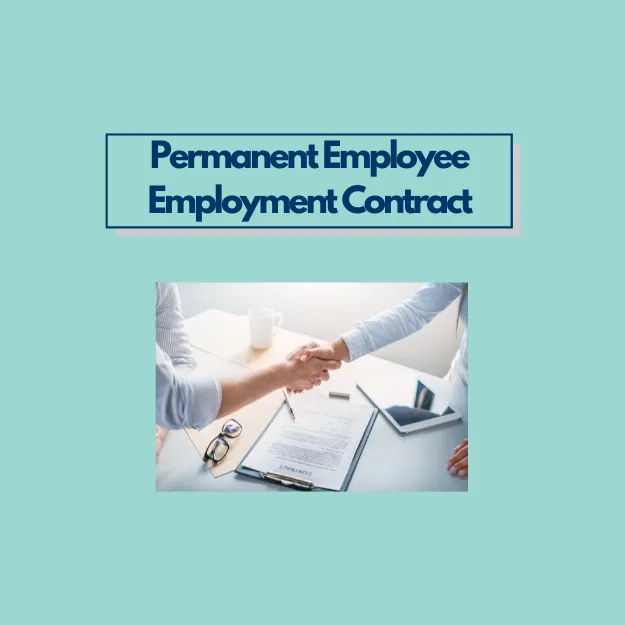
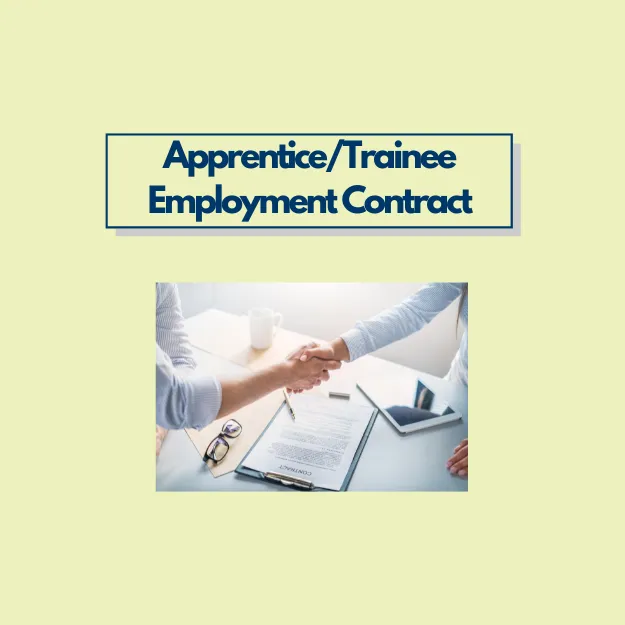
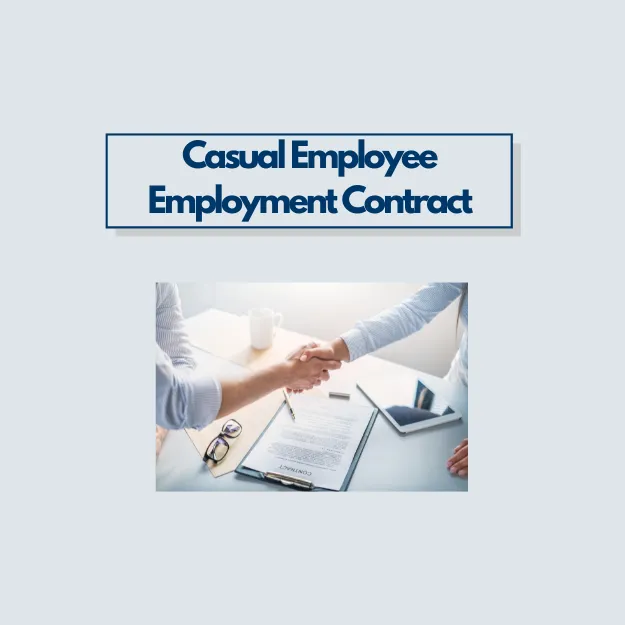
Order your combined contracts and policies here:
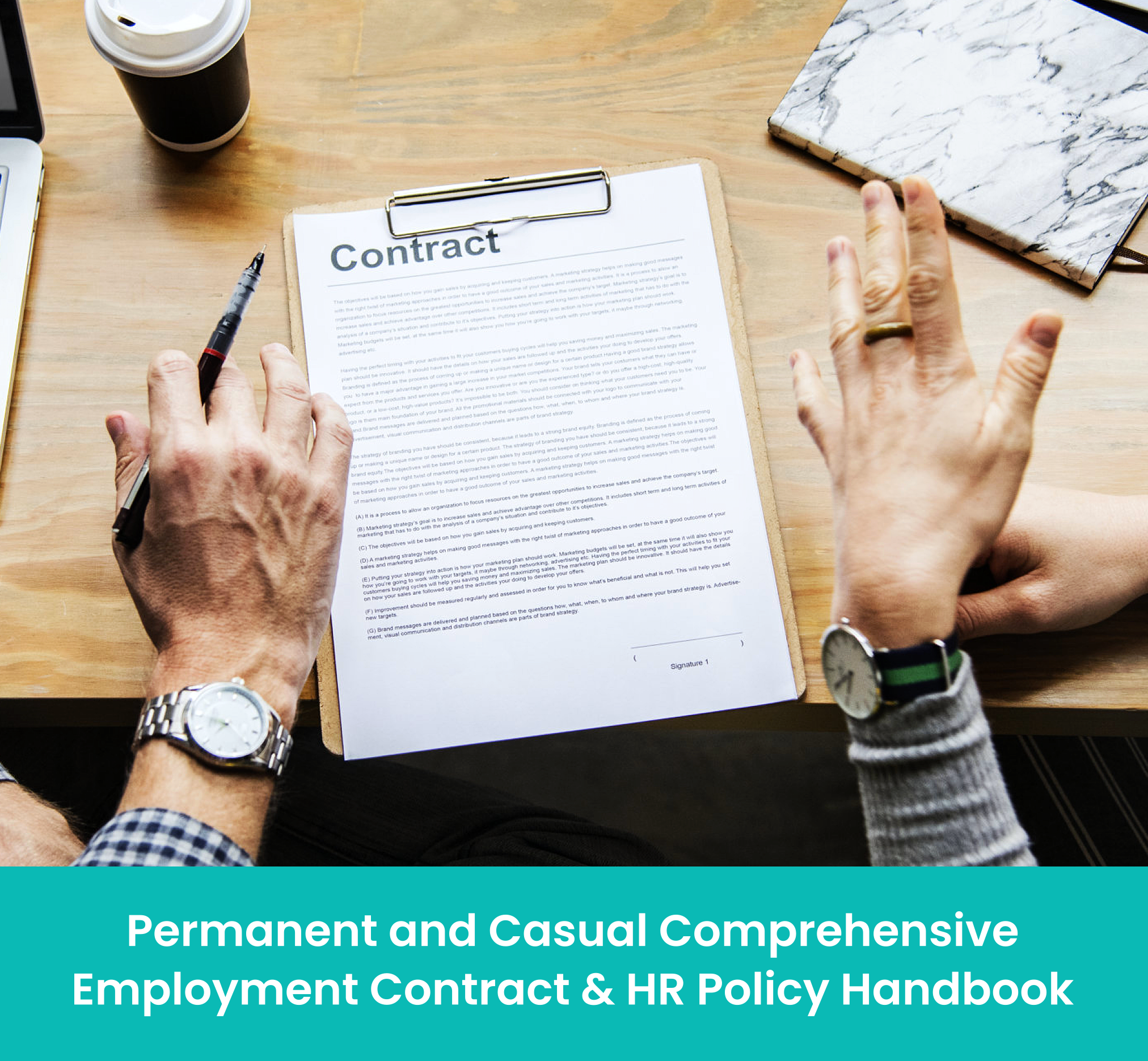
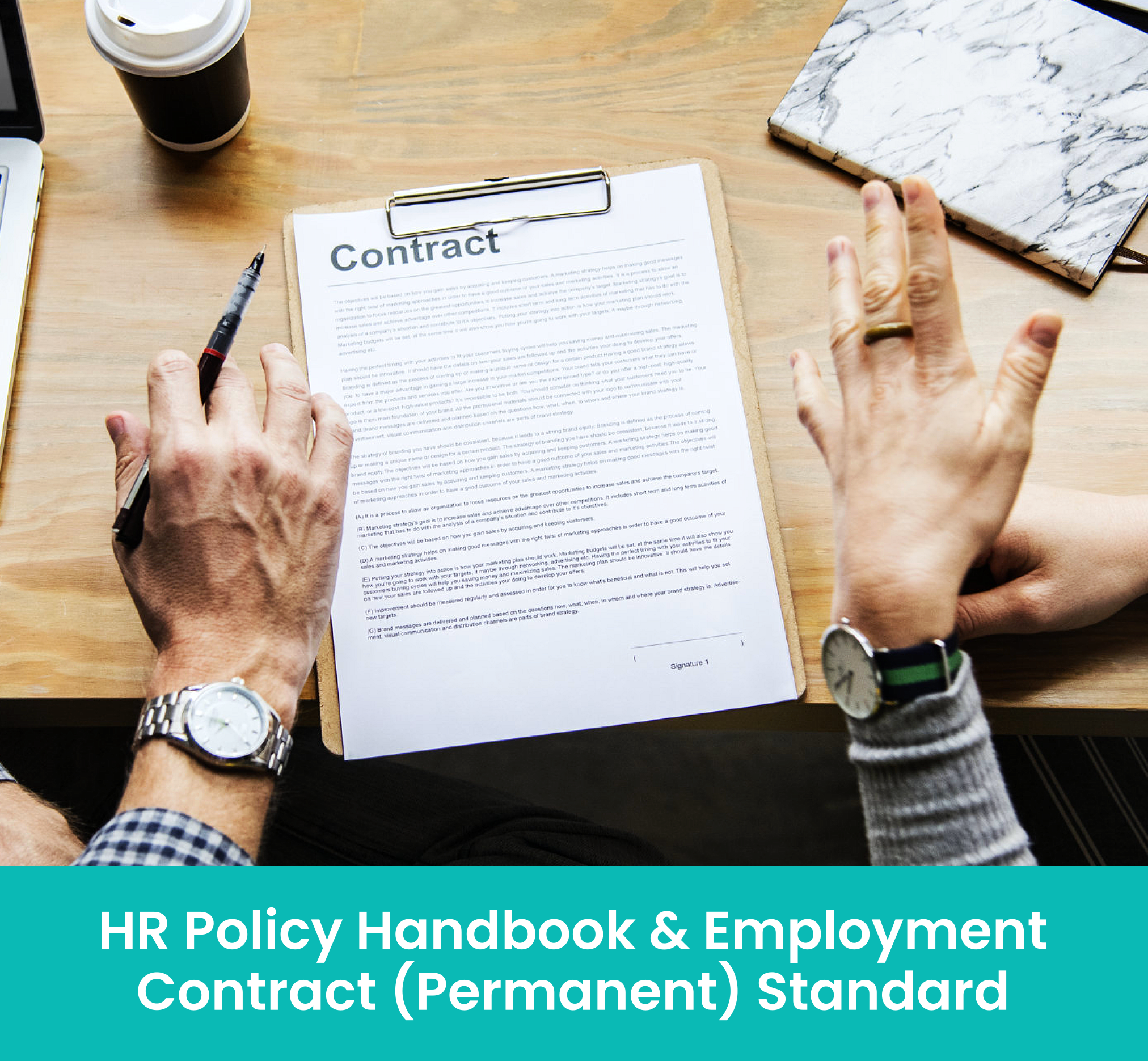
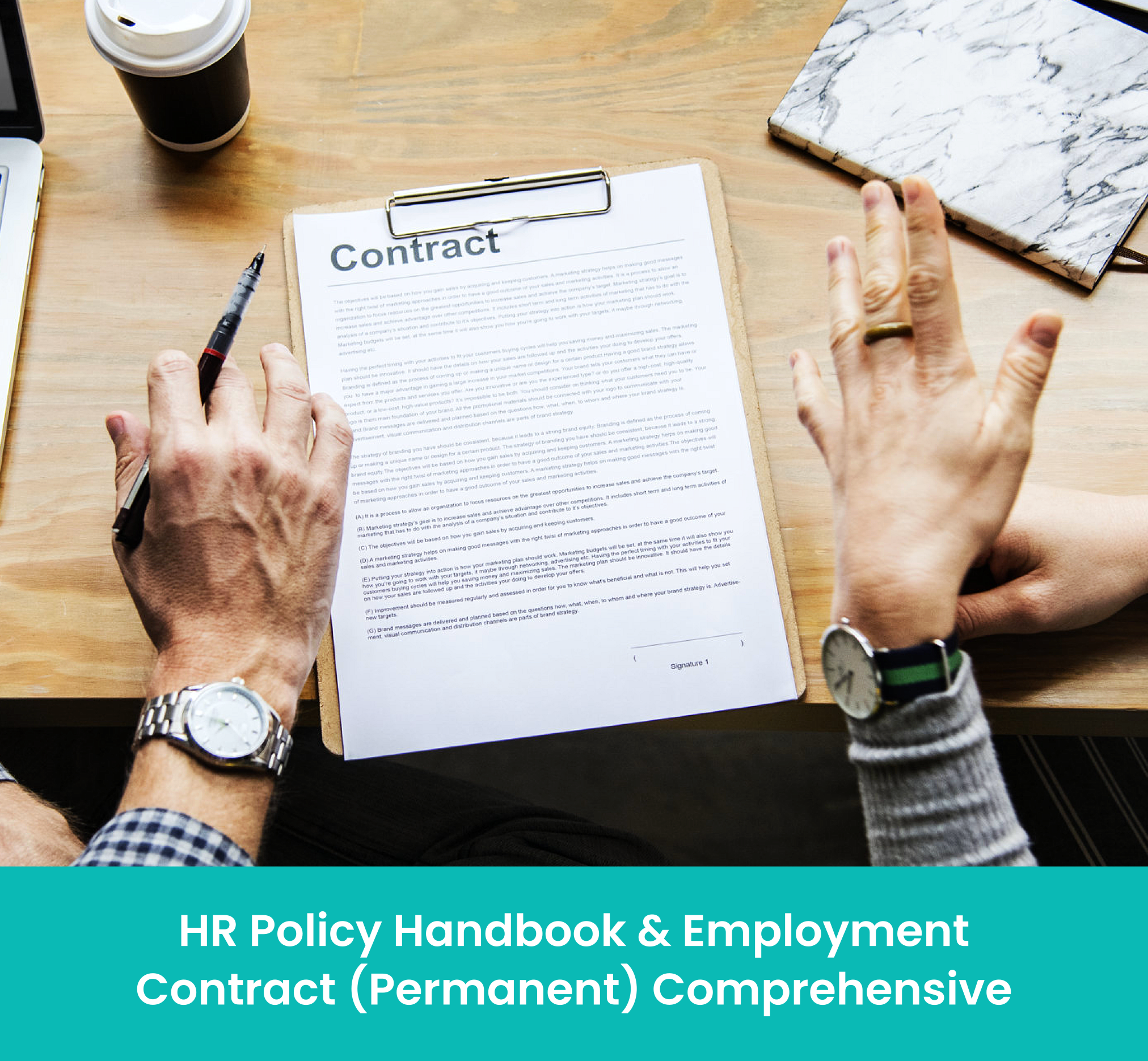

Your employment contract comes fully completed with your business and employee details. We also provide a template you can use for future hires.
The Comprehensive Employment Contract
covers key aspects like employee details, probation, salary, hours, and leave entitlements including job duties, bonuses, overtime, and additional clauses on confidentiality, leave, post-employment restraints, dispute resolution, and governing laws.
Our Latest Blog Post

Managing Employee Issues Without Making Things Worse
A calm, practical approach to performance management.
Managing employee performance can sometimes feel tricky especially when you genuinely care about doing the right thing.
A lot of business owners tell me they hesitate when it comes to managing employee performance because they don’t want to:
Damage the relationship
Say or do the wrong thing
Be seen as unfair
Accidentally create risk
That hesitation is completely understandable. But when performance issues are left unaddressed, they rarely improve on their own and they often become bigger issues, and more stressful over time.
But managing underperformance doesn’t have to feel confrontational or complicated. With the right approach, it can actually be fair, supportive, and clear for everyone involved.
Let’s go through when to step in, what to document, and how to stay fair and compliant without making things worse.
When Should You Step In?
As a general rule, it’s time to step in when underperformance is:
Ongoing rather than occasional
Affecting work quality, clients, or the wider team
Creating frustration or tension
Something you’ve already noticed more than once
Stepping in early doesn’t mean jumping straight to formal action. In most cases, it starts with a simple, respectful informal conversation about expectations and what support might be needed.
Addressing things early is often the kindest option - it gives the employee clarity and a genuine opportunity to improve.
Why Avoiding the Issue Can Create Bigger Problems
It’s natural to hope performance issues will resolve themselves, but avoiding them can lead to:
Confusion about expectations
Frustration from other team members
Inconsistent standards across your business
Clear, timely conversations help protect your business and your people.
What Should You Document?
Documentation often sounds more daunting than it needs to be.
You’re not building a case against someone, you’re simply keeping a clear record of what’s happening and how it’s being managed. The objective is for the employee to improve their performance.
Helpful documentation usually includes:
What the performance issue is, based on facts
When it occurred and whether it’s ongoing
What expectations were explained
What support, training, or guidance was offered
What was agreed as the next steps
Good records show that you’ve acted reasonably, communicated clearly, and given the employee a fair chance to improve.
How Do You Stay Fair and Compliant?
Fairness isn’t about getting everything perfect, it’s about following a reasonable and consistent process.
To stay fair and compliant:
Apply the same approach to all employees
Focus on behaviours and outcomes, not assumptions
Give the employee an opportunity to respond
Allow reasonable time and support for improvement
Follow a clear, structured process
Even valid performance concerns can lead to claims if they’re not handled well. Having a clear framework removes a lot of uncertainty and stress.
A Clear, Supportive Way to Manage Underperformance
One of the biggest challenges for business owners is feeling like they’re making it up as they go and not knowing what they can and can't do.
That’s why the Performance Management Toolkit inside the My HR Partner HR Hub exists.
It’s designed to give you:
A step-by-step approach to managing performance issues
Guidance on what to say and what not to say
Practical templates and checklists for documentation
Confidence that your process is fair, reasonable, and aligned with best practice
It supports you to handle issues calmly and professionally.
HR Support That Fits Where You’re At
Every business is different, which is why there are flexible options:
Subscribe to the HR Hub for ongoing access to HR tools and resources
Purchase the Performance Management Toolkit if this is your immediate challenge
Combine resources with an HR advice call if you’d like reassurance along the way
You don’t have to do everything at once just take the next right step.
You Don’t Have to Avoid Performance Conversations
Being a good employer doesn’t mean avoiding difficult conversations.
It means handling them with clarity, fairness, and care.
👉 Explore the Performance Management Toolkit for practical, supportive guidance
👉 Or subscribe to the HR Hub for ongoing HR support as your business grows
With the right tools, managing employee performance can feel far more manageable, and much less stressful.
Ready to Feel More Confident About HR?
You don’t need to navigate HR alone — and you don’t need to overcomplicate it either.
👉Explore the HR Hub and new toolkits to see what support looks like when it’s practical, calm, and genuinely helpful.
👉Subscribe for full access, or choose the toolkit that fits your current challenge.
Sometimes, having the right resource at the right time makes all the difference.
For further expert advice on human resources or if you have any questions about anything HR related, get in touch.
Karen Hillen is your HR Partner, she helps businesses by providing HR support and advice services.
For the right HR support and advice, book a My HR Partner HR Advice call with Karen Hillen.

We provide HR advice and support. We have trusted partners to assist with any employment law issues
outside of our scope.
More info
Suite 17, 741-743 Lawrence Hargrave Dr COLEDALE NSW
4/133 Wharf St TWEED HEADS NSW
ABN 30 644 527 015

Get HR Advice from our HR expert
Our Latest Blog Post
Managing Employee Issues Without Making Things Worse
A calm, practical approach to performance management.
Managing employee performance can sometimes feel tricky especially when you genuinely care about doing the right thing.
A lot of business owners tell me they hesitate when it comes to managing employee performance because they don’t want to:
Damage the relationship
Say or do the wrong thing
Be seen as unfair
Accidentally create risk
That hesitation is completely understandable. But when performance issues are left unaddressed, they rarely improve on their own and they often become bigger issues, and more stressful over time.
But managing underperformance doesn’t have to feel confrontational or complicated. With the right approach, it can actually be fair, supportive, and clear for everyone involved.
Let’s go through when to step in, what to document, and how to stay fair and compliant without making things worse.
When Should You Step In?
As a general rule, it’s time to step in when underperformance is:
Ongoing rather than occasional
Affecting work quality, clients, or the wider team
Creating frustration or tension
Something you’ve already noticed more than once
Stepping in early doesn’t mean jumping straight to formal action. In most cases, it starts with a simple, respectful informal conversation about expectations and what support might be needed.
Addressing things early is often the kindest option - it gives the employee clarity and a genuine opportunity to improve.
Why Avoiding the Issue Can Create Bigger Problems
It’s natural to hope performance issues will resolve themselves, but avoiding them can lead to:
Confusion about expectations
Frustration from other team members
Inconsistent standards across your business
Clear, timely conversations help protect your business and your people.
What Should You Document?
Documentation often sounds more daunting than it needs to be.
You’re not building a case against someone, you’re simply keeping a clear record of what’s happening and how it’s being managed. The objective is for the employee to improve their performance.
Helpful documentation usually includes:
What the performance issue is, based on facts
When it occurred and whether it’s ongoing
What expectations were explained
What support, training, or guidance was offered
What was agreed as the next steps
Good records show that you’ve acted reasonably, communicated clearly, and given the employee a fair chance to improve.
How Do You Stay Fair and Compliant?
Fairness isn’t about getting everything perfect, it’s about following a reasonable and consistent process.
To stay fair and compliant:
Apply the same approach to all employees
Focus on behaviours and outcomes, not assumptions
Give the employee an opportunity to respond
Allow reasonable time and support for improvement
Follow a clear, structured process
Even valid performance concerns can lead to claims if they’re not handled well. Having a clear framework removes a lot of uncertainty and stress.
A Clear, Supportive Way to Manage Underperformance
One of the biggest challenges for business owners is feeling like they’re making it up as they go and not knowing what they can and can't do.
That’s why the Performance Management Toolkit inside the My HR Partner HR Hub exists.
It’s designed to give you:
A step-by-step approach to managing performance issues
Guidance on what to say and what not to say
Practical templates and checklists for documentation
Confidence that your process is fair, reasonable, and aligned with best practice
It supports you to handle issues calmly and professionally.
HR Support That Fits Where You’re At
Every business is different, which is why there are flexible options:
Subscribe to the HR Hub for ongoing access to HR tools and resources
Purchase the Performance Management Toolkit if this is your immediate challenge
Combine resources with an HR advice call if you’d like reassurance along the way
You don’t have to do everything at once just take the next right step.
You Don’t Have to Avoid Performance Conversations
Being a good employer doesn’t mean avoiding difficult conversations.
It means handling them with clarity, fairness, and care.
👉 Explore the Performance Management Toolkit for practical, supportive guidance
👉 Or subscribe to the HR Hub for ongoing HR support as your business grows
With the right tools, managing employee performance can feel far more manageable, and much less stressful.
Ready to Feel More Confident About HR?
You don’t need to navigate HR alone — and you don’t need to overcomplicate it either.
👉Explore the HR Hub and new toolkits to see what support looks like when it’s practical, calm, and genuinely helpful.
👉Subscribe for full access, or choose the toolkit that fits your current challenge.
Sometimes, having the right resource at the right time makes all the difference.
For further expert advice on human resources or if you have any questions about anything HR related, get in touch.
Karen Hillen is your HR Partner, she helps businesses by providing HR support and advice services.
For the right HR support and advice, book a My HR Partner HR Advice call with Karen Hillen.
We provide HR advice and support.
We have trusted partners to assist with
any employment law issues outside
of our scope.
More info
Suite 17, 741-743 Lawrence Hargrave Dr
COLEDALE NSW
4/133 Wharf St
TWEED HEADS NSW
ABN 30 644 527 015


Get HR Advice from our HR expert